












Beaufort West, dubbed the oasis in the Karoo, stands as a testament to resilience and adaptation in the heart of South Africa’s arid Great Karoo region. Situated south of the Nuweveld Mountains and nourished by the Gamka River, Beaufort West defies the surrounding desert with an annual rainfall of 200 mm. The town owes its origins to Jacob and Abraham de Clercq, Huguenot immigrants who established the farm Hooyvlakte in 1760. This fertile land, blessed with abundant springs and fertile soil, attracted settlers seeking respite from the aridity of the Karoo. By the early 19th century, the need for a local magistrate and church spurred the establishment of Beaufort West in 1818, initially known as Hooyvlakte. Under Abraham de Clercq’s stewardship, Hooyvlakte flourished into a hub renowned for its quality livestock and agricultural produce. The town’s growth accelerated after its proclamation as a district in 1818, subsequently named Beaufort in honor of Lord Charles Somerset’s father, the Duke of Beaufort. The suffix “West” was added later to distinguish it from other Beaufort in the Cape. Town planning commenced in 1820, with irrigation channels dug by the first landdrost, J. Baird, ensuring the town’s sustainability by directing water from mountain springs to nourish its gardens and orchards. By 1836, Beaufort West became the Cape Colony’s first municipality under a new ordinance, signalling its importance as a civic and commercial centre in the Karoo. The town’s prosperity was further bolstered by agricultural innovations, such as the introduction of merino sheep by Arthur…
Beaufort West, dubbed the oasis in the Karoo, stands as a testament to resilience and adaptation in the heart of South Africa’s arid Great Karoo region. Situated south of the Nuweveld Mountains and nourished by the Gamka River, Beaufort West defies the surrounding desert with an annual rainfall of 200 mm.
The town owes its origins to Jacob and Abraham de Clercq, Huguenot immigrants who established the farm Hooyvlakte in 1760. This fertile land, blessed with abundant springs and fertile soil, attracted settlers seeking respite from the aridity of the Karoo. By the early 19th century, the need for a local magistrate and church spurred the establishment of Beaufort West in 1818, initially known as Hooyvlakte.
Under Abraham de Clercq’s stewardship, Hooyvlakte flourished into a hub renowned for its quality livestock and agricultural produce. The town’s growth accelerated after its proclamation as a district in 1818, subsequently named Beaufort in honor of Lord Charles Somerset’s father, the Duke of Beaufort. The suffix “West” was added later to distinguish it from other Beaufort in the Cape.
Town planning commenced in 1820, with irrigation channels dug by the first landdrost, J. Baird, ensuring the town’s sustainability by directing water from mountain springs to nourish its gardens and orchards. By 1836, Beaufort West became the Cape Colony’s first municipality under a new ordinance, signalling its importance as a civic and commercial centre in the Karoo.
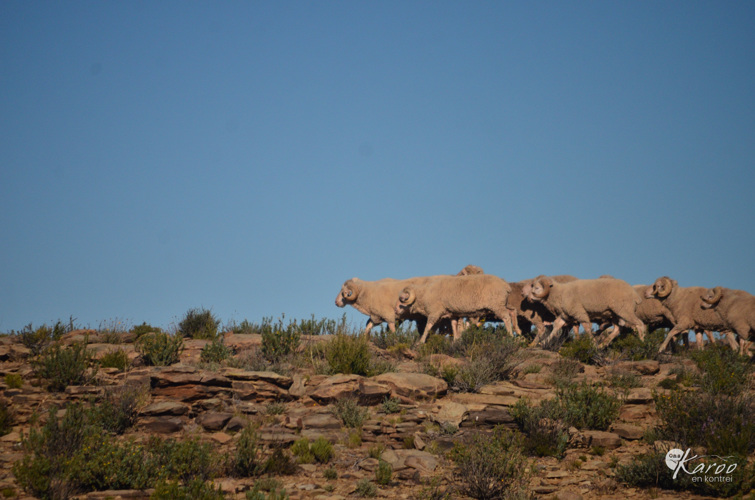
The town’s prosperity was further bolstered by agricultural innovations, such as the introduction of merino sheep by Arthur Kinnear in 1836, which thrived in the region’s dry climate and bolstered the local wool economy. The arrival of the railway in 1880 cemented Beaufort West’s role as a crucial transport hub, facilitating trade and growth across the Karoo.
Throughout its history, Beaufort West has weathered challenges, including the devastating drought of 1849 that decimated wildlife and livestock alike, marking a turning point as farming replaced the once vast herds of game. Economic diversification followed with the establishment of the town’s first bank in 1854 and its inaugural newspaper, The Courier, in 1869.
Architecturally, Beaufort West boasts a blend of Victorian, Georgian, and Cape Dutch styles, exemplified by landmarks like the Romanesque Anglican Church and the striking Neo-Gothic Dutch Reformed Church, which dominate its skyline. The iconic Beaufort West Town Hall, opened in 1866 and now a national monument, remains a focal point of civic pride and historical preservation.
Notably, Beaufort West is renowned for producing one of South Africa’s most celebrated figures, Professor Christian Barnard, whose pioneering heart transplant in 1967 at Groote Schuur Hospital brought global acclaim to his hometown. The Barnard family’s legacy is enshrined in Beaufort West’s museum complex, housed in historic buildings that chronicle the town’s journey from pastoral settlement to vibrant urban centre.
Neighbouring Towns
Distances below are the most popular roads, sometimes dirt and sometimes tar.