Moltenopas

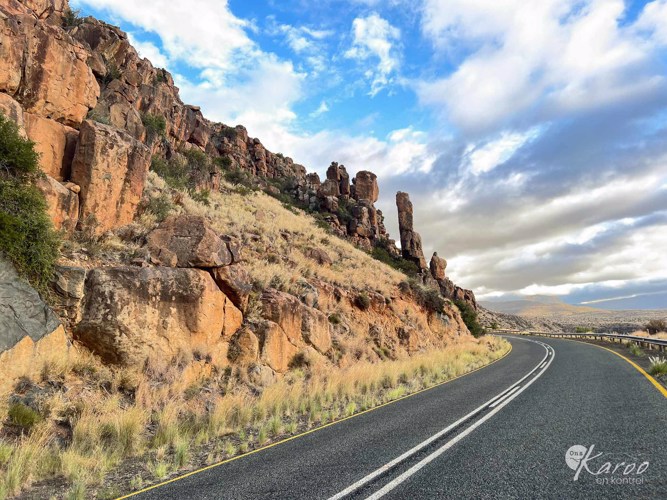
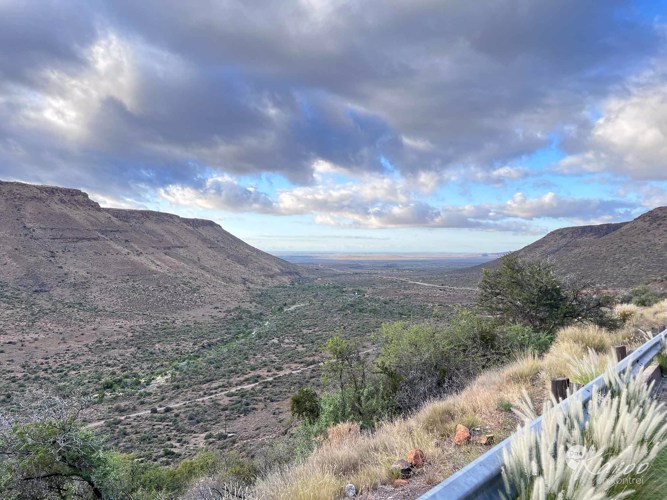


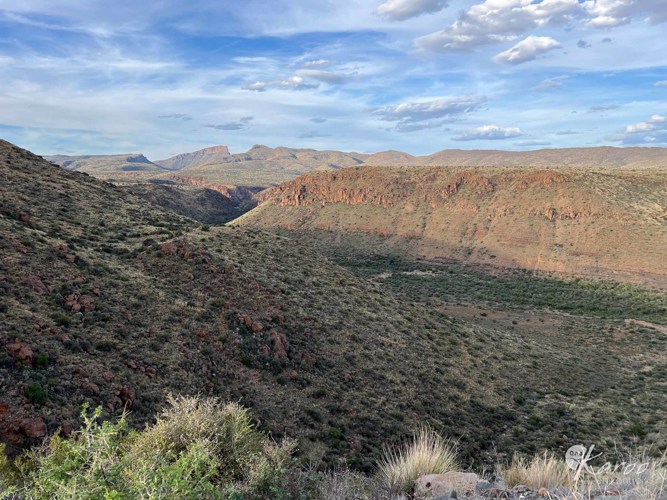
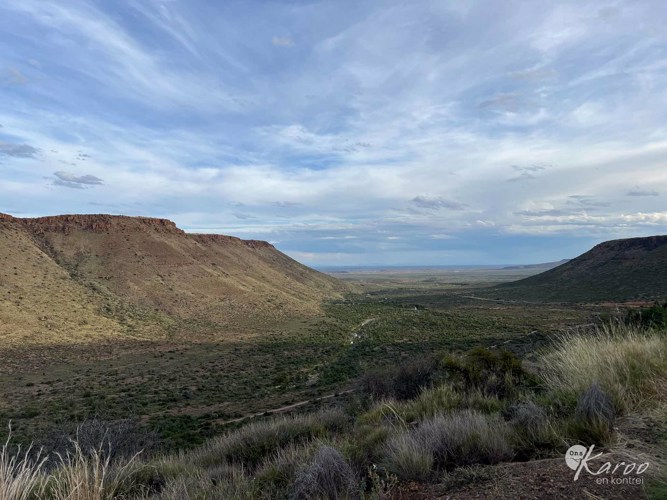


On a map drawn by surveyor C. Stretch in 1830, a road appears across the Nieuwveld, but at that time, it was probably little more than a footpath. On 2 September 1837, magistrate Meintjes wrote to the Colonial Office that farmers interested in a road to the top of the mountain at Bokkekraal - such as Pieter Jacobs of Slangefontein - intended to build a road themselves at a cost of about £350. This plan was eventually carried out, but the road was only suitable for oxcarts and horses.
In the seventies, the Divisional Council decided to build a more suitable pass to the east of it and extend it to Loxton and other northern towns.
On 8 March 1878, the Courier reported: “Men zegt dat er goede voortgang gemaakt is met den weg van Donkergat naar Rhenosterfontein. Op eerst genoemde plaats is men besig een bandiete statie te bouwen." (The "station" was a temporary prison for the bandit workers. It later became the farmhouse of Donkergat and was washed away in later years during a flood. Rhenosterfontein is a few miles north of it.)
In Jan. 1880, the chairman of the Divisional Council, Magistrate Garcia, wrote to Premier John Charles Molteno (in Claremont) to inquire whether he would be pleased if the new mountain pass were named after him.
Molteno owned about six farms in the district and was a member of the Town Council from 1853 to 1858. In a letter dated 26 January 1880, he expressed his appreciation for the gesture and expressed the hope that he would be able to attend the official opening of the pass on 18 May 1880. On that date, the Molteno Pass replaced the old wagon road to the west of it. The old road can still be seen here and there today, especially after a snowfall.
The Molten Pass was particularly expensive to maintain, as every rainstorm washed it away. In 1883, the Divisional Council wanted to erect a toll house at the foot of the pass, but there was much opposition to this. When it was built the following year, it was not particularly profitable. For example, from 1 September 1884 to 31 January 1885, it yielded only £2 4s. 4d. For the half-year ending 31 December 1884, the income was £I3 I3s. 10d., while the toll houses at Meiringspoort and De Jagerspas yielded £127 10s. 1d. and £15 15s. 5d. respectively.
Translated excerpt from: Uittreksel uit: Hooyvlakte - Die verhaal van Beaufort-Wes 1818-1968 deur W.G.H en S. Vivier

Trading hours
No set trading hours
Address
R381, Beaufort Wes
Loxton direction, 12km outside Beaufort West