Namies: An abandoned settlement
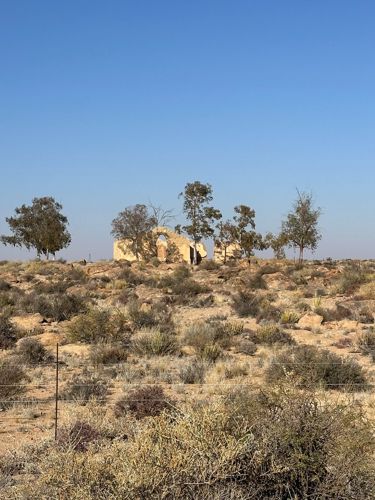

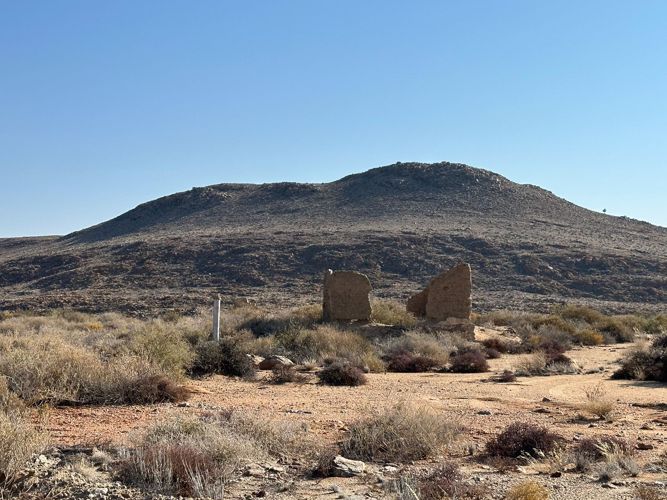
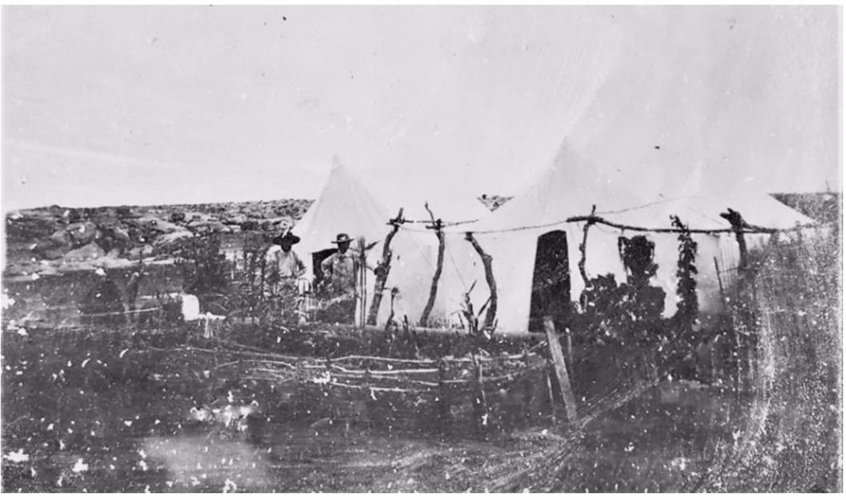

Namies, a settlement with a rich history, lies nestled 26km south-west of Pofadder and 25km south of Pella. The Namies mountains, with their granite koppies are believed to have been named from the Nama word for water, //gami. Another theory suggests that the adjacent farm, Vogelstruis Hoek, means “volstruishoek” influenced the name, with “volstruis” in Nama being //ami.
In the early 19th century, the areas known as Namies North (later called Onder Namies), and Namies South were linked by the Namiespoort a pass through the Namies mountains. The main dirt road through Bushmanland passed Namies South, marking it as the first water source after Gamoep, located 115 km east towards Namakwaland.
William Charles Scully, Civil Commissioner of Namaqualand from 1892 to1893, described these hills and their water source as an “Island in the ocean of Boemanland desert”. Scully, also a keen writer, set his stories and quotes “Between Sun and Sand, the Tale of an African Desert” in Namies.
Trekboere (migrant farmers) from the Namies area repeatedly petitioned the government for a school and a church. The nearest school was the Roman Catholic school in Pella.
After a visit from JH Hofmeyr in 1906, the establishment of a school was approved. By 1910, two female teachers were appointed, and they reported that school was held in the church with a boarding house available. They requested a school building with two rooms of 30 x 25 feet, suggesting local resident Jan Maas for the construction, using granite and lime available locally. Residents share that a dedicated school building was never erected and that classes were always held in the church. The construction never commenced partly because the official number of residents for Namies was never confirmed.
In 1912, the Dutch Reformed Church informed the Department of Education they could no longer run a school in their church, necessitating alternative arrangements. However, school inspection reports indicated that the school closed in 1951
With the development of Pofadder as a trading station, the NG Church officially decided in 1916 to establish their church there, choosing Pofadder over Namies.
Consequently, Namies never developed beyond a village. However, the old church ruins remain visible from the road, identifiable by a cluster of eucalyptus trees. The old boarding house has been renovated and is now used as a residential home.
Source:
- Nienaber, G. &. R. P., 1977. Toponymica Hottentotica.. Naamkundereeks No 7 ed. Pretoria: SA Naamkundesentrum. RGN.
- Orton, L. W. &. J., NOVEMBER 2023. Namies: the history of an abandoned settlement in Bushmanland. Vernacular Architecture Society Of South Africa, Issue 38.